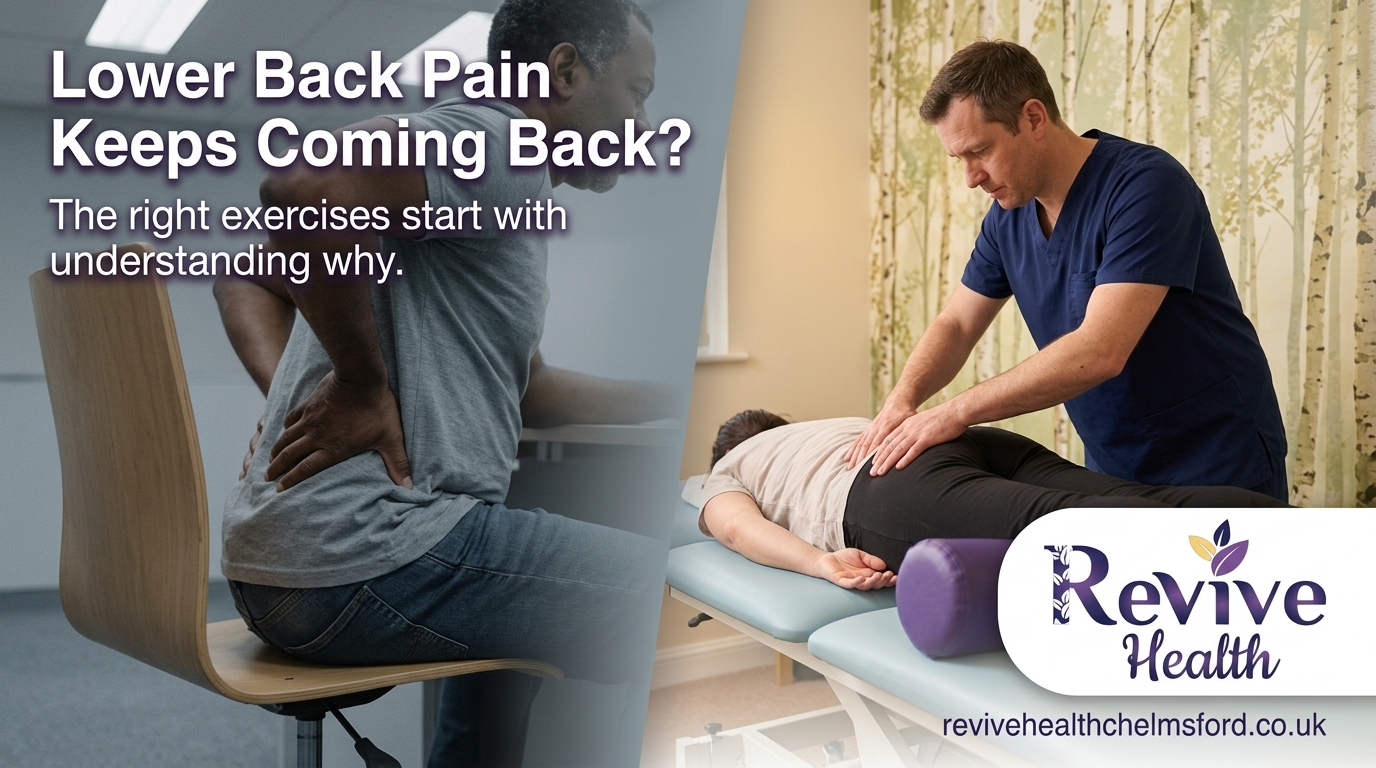
Lower back pain that flares up every time you sit, lift, or train does not improve simply by resting. The key to real relief lies in targeted lower back strengthening exercises tailored to your unique pain pattern and movement habits. At Revive Health Chelmsford, we start with a thorough assessment to identify what’s causing your discomfort and build a personalised plan that supports recovery without making your pain worse. Ready to move with confidence? Keep reading to learn how the right approach can make all the difference. For further insight on back pain management, you might find this article helpful: exercises for back pain.
Understanding Lower Back Strain
Finding relief from persistent lower back pain starts with understanding its causes. Let’s explore why your back might hurt and how to address it effectively.
Common Causes of Pain
Lower back strain often results from various factors. Overuse, poor posture, and injuries can all play a role. For those who spend long hours at a desk, back pain from sitting is a common complaint. Muscle imbalances, where one group of muscles is stronger than another, can also lead to discomfort. For some, issues might stem from weak core muscles that fail to support the spine properly.
Debunking Rest Myths
While rest might seem like the right answer, it doesn’t always help. In fact, too much rest can weaken the muscles that support your back, making the pain worse. Movement is key to recovery. Engaging in gentle, safe back exercises can keep your muscles active and reduce stiffness.
Tailoring Exercises to Pain Patterns
Not every exercise fits every pain pattern. Exercises should be matched to your specific needs to avoid further aggravation. A movement assessment, like the one offered at Revive Health Chelmsford, can identify which exercises will help and which to avoid.
Common Mistakes to Avoid

As you begin your journey to strengthen your back, it’s important to steer clear of common pitfalls that could hinder your progress.
One-Size-Fits-All Routines
Generic routines can do more harm than good. What works for one person might not work for another. Your back pain’s root cause should guide your exercise choice. A personalised rehab programme ensures exercises are tailored to your unique condition.
Poor Technique Pitfalls
Executing exercises with incorrect form can lead to more pain. Focus on maintaining a neutral spine and engaging your core. Techniques like the hip hinge are crucial for safe movement patterns. It’s worth seeking guidance if you’re unsure about your form.
Ignoring Core and Hip Work
It’s easy to focus solely on the back, but neglecting the core and hips can lead to imbalance. Core stability exercises and glute strengthening for back pain are vital. Building strength in these areas supports your spine and reduces strain.
Effective Lower Back Strengthening

With the right approach, strengthening exercises can be both safe and effective. Let’s delve into what makes a robust exercise plan.
Personalised Exercise Selection
Choosing exercises based on an assessment ensures they’re suited to your pain pattern. At Revive Health Chelmsford, exercises like the dead bug and bird-dog are often recommended. These exercises target core stability without overloading the back.
Progression Tips and Dosage
Start with low-intensity exercises and gradually increase as your strength improves. Pay attention to how your body responds. Consistency is key, but listen to your body to avoid overexertion. It’s also essential to monitor progress and adjust exercises as needed.
When to Seek Professional Help
If pain persists or worsens, seeking help is crucial. A physiotherapy Chelmsford assessment can provide further insights. Professionals can guide you through exercises and offer treatments like acupuncture for back pain.
Frequently Asked Questions
What are the best exercises for lower back pain relief?
Exercises like the dead bug and bird-dog are highly effective for easing lower back pain. They focus on core stability and can be tailored to individual needs.
How can I prevent back pain from getting worse?
Stay active and avoid prolonged periods of rest. Incorporate exercises that strengthen your core and hips to provide better support for your back.
When should I see a physiotherapist for back pain?
If your pain persists or impacts daily activities, seeing a physiotherapist can help. They offer personalised assessments and treatment plans to address the root cause of your pain.
Can poor posture really cause back pain?
Yes, poor posture can lead to muscle imbalances and strain. Ensuring proper alignment when sitting or standing can help prevent pain.
Are there any quick fixes for back pain?
While there are no quick fixes, combining exercises, good posture, and professional guidance can lead to long-term relief and prevention.
Head to the website or give us a call on 01245 956391 | 07723 503277
Leave a Reply